
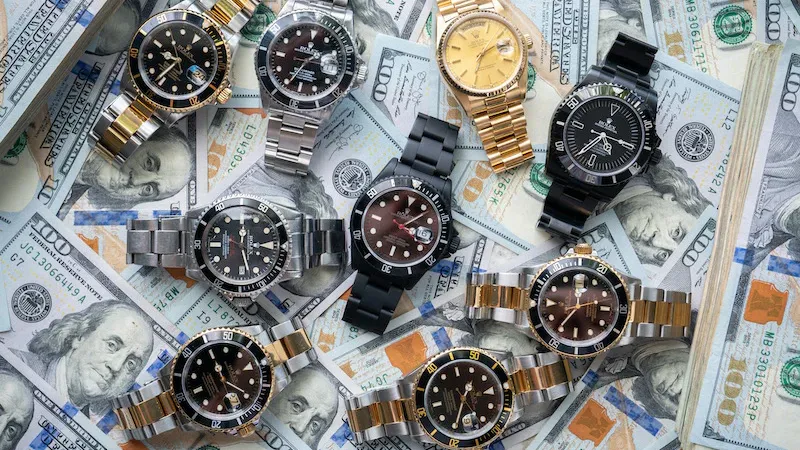
$124 trillion in assets is about to change hands. The luxury watch market is one of the first places that capital will land.
Over the next 25 years, roughly $124 trillion in assets will transfer from Baby Boomers to Gen X, Millennials, and Gen Z in the U.S. alone. That's the updated figure from Cerulli Associates, revised upward from their original $84 trillion projection as asset prices surged post-pandemic.
Nearly $100 trillion of that will come from Boomer and older households. More than half will originate from the top 2% of high-net-worth families.
The luxury watch market sits directly in the path of that capital.
But how the money shows up matters as much as how much there is.
At The Art of Time, we're watching this play out in real time. Clients inheriting collections. Families liquidating estates. New buyers entering with completely different expectations than the previous generation.
Here's what actually happens when wealth transfers, and where the real opportunities sit for collectors, dealers, and advisors.
Inheritors Think Like Investors
Previous generations accumulated watches as trophies or gifts. Little thought went to liquidity or long-term performance.
The next generation grew up with brokerage apps, crypto portfolios, and real-time dashboards.
They treat inherited watches the way they treat any other asset.
They check comps. Track values. Decide what to keep versus sell.
Then they redeploy capital from low-conviction pieces into fewer, better, more liquid references.
A real example from 2024:
A client inherited a 40-piece collection. Within 90 days, he kept 8 and sold 32.
The 8 he kept? All Rolex steel sports models and one vintage Patek Philippe.
The 32 he sold included pieces his father paid $15,000–$30,000 for that now trade at $4,000–$12,000.
He redeployed that capital into three references he actually wanted:
Rolex Daytona "Panda" 126500LN
Patek Phillippe Nautilus 5711
Audemars Piguet Royal Oak 15500
All bought at rational entry points during the 2024 - 2025 market reset.
That pattern is repeating across the estate and pre-owned watch market.
The Estate Arbitrage Most People Miss
Here's the trade that disciplined collectors understand.
Inheritors often sell pieces they have no emotional connection to at meaningful discounts for quick liquidity. That creates buying opportunities for anyone who understands fair market value in the secondary watch market.
I've seen estate sales where a vintage Patek or rare Rolex reference moved 20–30% below market because the heir wanted liquidity and had no attachment.
Estate executors and heirs frequently don't know what they have. They get one opinion from a local jeweler offering forty cents on the dollar. Or they list everything online without understanding actual comparisons.
If you have expertise and capital, you can build meaningful positions in desirable references at disciplined entry points.
This dynamic is just beginning. As more estates settle over the next decade, supply of pre-owned luxury watches will increase significantly. The winners will be those who can evaluate quickly and move decisively.
What Gets Kept vs. What Gets Sold
Not all inherited watches are equal. The market is already showing clear patterns.
Pieces heirs typically keep:
Steel Sports models from Rolex, Patek Philippe, and Audemars Piguet
Watches with documented provenance or family history
Pieces that fit contemporary wrist sizes (38mm+)
Anything with proven resale value and secondary market liquidity
Pieces that typically get sold quickly:
Two-tone sport models (unless highly collectible)
Mid-size watches under 36mm (unless iconic)
Generic dress watches from non-blue-chip brands
Quartz pieces
Anything requiring expensive service without strong resale support
The market will see a flood of unwanted inheritance pieces over the next decade. Most will trade at meaningful discounts to current market value.
This flight to quality is already visible in the data. Swiss watch exports totaled CHF 26.0 billion in 2024, down 2.8% year-over-year. But watches priced above CHF 3,000 represented more than 80% of total export value, even as overall unit volumes dropped 9.4%. The premium segment holds. Everything else compresses.
Wealth Transfer Accelerates Flight to Quality
When someone inherits a mid-tier watch without historical significance, the first question is always: what can I get for this?
If resale value is 40–50% of retail and the effort to sell is high, many pieces sit in drawers or get offloaded in bulk at even deeper discounts.
I've had three separate conversations in the past six months where 80% of a 10–15 piece inherited collection's value was concentrated in two or three Rolex references. The remaining pieces combined were worth less than a single Submariner.
They kept the Rolex. They donated or gifted the rest.
Concentration wins. Sentiment loses.
That is the wealth transfer watch market in one line.
The Next Generation of Watch Buyers Is Different
Younger high-net-worth collectors are reshaping demand.
They prefer versatile, sporty designs over formal dress watches. They care about narrative and brand authenticity. They use platforms like Chrono24 and WatchCharts to assess value before making a purchase. And they expect transparency and execution speed from dealers.
This tracks with broader market trends. The pre-owned luxury watch market is estimated at roughly $25 billion in 2024 and growing at 7–10% annually, outpacing the new watch market. Deloitte's 2024 Swiss Watch Industry Study projects the secondary market could rival the primary market in total volume within the next decade.
Old opacity is now a liability. Trust and expertise are premium services.
The commoditized online marketplace handles smaller transactions efficiently. But serious capital, six- and seven-figure estate pieces, still moves privately through trusted intermediaries. At that level, discretion and certainty matter more than the lowest listed price.
The spread between public ask and private execution can be 10–20%.
If you want to capture wealth transfer capital in the luxury watch space, you operate in that private market.
The Bottom Line
The watch market will benefit from the largest wealth transfer in history.
But not evenly.
Most heirs won't keep everything. Most will consolidate. Most will reallocate into fewer, better, more liquid references.
The upside accrues to those who understand that inheritance is optionality, not obligation.
At The Art of Time, we help families and collectors navigate that transition. Not just moving pieces, but structuring collections for the next chapter.
If you're managing an inherited watch collection, evaluating estate pieces, or thinking about how luxury watches fit into your broader wealth strategy, let's talk. My messages are open.
Sources:
Cerulli Associates, "U.S. High-Net-Worth and Ultra-High-Net-Worth Markets 2024: The Great Wealth Transfer," December 2024. Updated projection: $124 trillion through 2048.
Federation of the Swiss Watch Industry (FH), "The Swiss and World Watch Industries in 2024," January 2025.
Deloitte, "Swiss Watch Industry Study 2024."
Grand View Research / Market.us, pre-owned luxury watch market sizing reports, 2024–2025.
Williams & Preisser, Preparing Heirs: Five Steps to a Successful Transition of Family Wealth and Values, 2010.
— Christian Bruhn