
In the desert, time behaves differently.
It is not announced by notifications or divided by appointments. It is recognized by light, by the angle of the sun against stone, by the cooling of the air after sunset, and by the silence that arrives once the heat retreats. Long before mechanical clocks, people here understood the passing of hours through observation rather than measurement.
Perhaps this is why my relationship with watches never began with fascination for luxury. It began with a question.
Why would a mechanical watch still matter in a world where time is already perfect?
Our devices synchronize with satellites orbiting above the earth. They are more accurate than anything a balance wheel can ever hope to be. Yet they leave no memory. A phone from ten years ago is obsolete. A mechanical watch from a century ago is alive.
I did not understand this difference until I encountered Parmigiani Fleurier.
The Tonda 1950
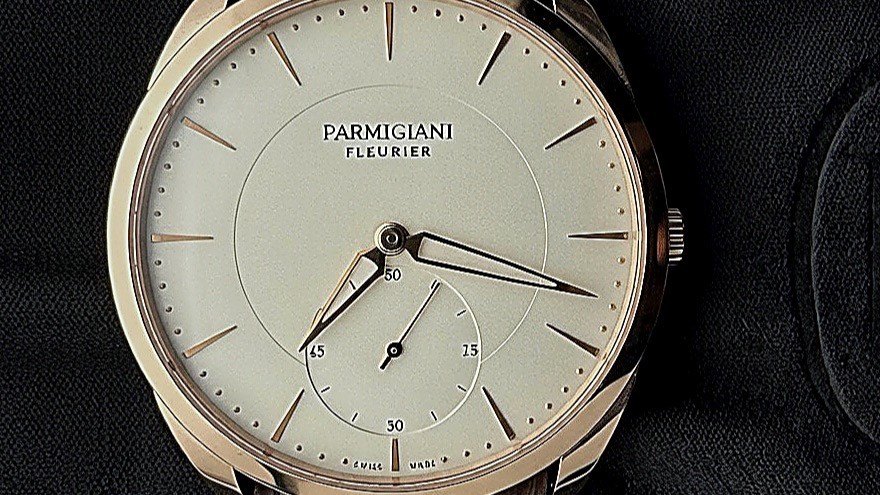
The first watch I spent real time with was the Tonda 1950. At first glance, it almost resisted admiration. There was no spectacle and no dramatic complication asking for attention. The case was balanced, the dial calm, and the finishing so discreet that one could easily overlook it in a crowded room.
I nearly misunderstood it.
But watches are not understood in a display case. They are understood in life. After several days, I noticed something unusual. I was no longer checking the time as often. Instead, I was noticing the watch itself quietly and almost subconsciously. The bezel catching a soft reflection in the late afternoon, the calm movement of the hands, and the absence of urgency.
It did not try to impress me.
It changed my pace.
There were moments, small and private, when I would look at it not to know the hour but simply to observe it. The texture, the proportions, and the gentle harmony of its surfaces. In those moments it did not feel like an instrument. It felt closer to a small piece of art, something created to be lived with rather than merely used.
The Toric Hémisphères Rétrograde
If the Tonda 1950 taught stillness, the Toric taught meaning.
The retrograde hand, the date, advances patiently across its arc and then in a single instant returns to its beginning. I found myself waiting for that moment. Not out of technical curiosity, but because it felt familiar. We imagine time as a straight path, yet human life is cyclical. There are departures, returns, and new beginnings emerging from old conclusions. The hand does not simply indicate a date. It performs a gesture.
The dial carries a quiet complexity. Two small sub dials indicate day and night for each time zone, a subtle but thoughtful detail. They transform the watch from a dual time instrument into something more human. It does not merely show where another place is in hours. It shows whether that place is asleep or awake.
Only later did I learn the depth of its travel function. Unlike most travel watches, it does not approximate distance in whole hours. It allows two places on earth to be paired precisely, even when separated by half hour or quarter hour differences. It respects geography as it truly exists rather than simplifying it.
Living between places and cultures, I often find conversations occurring while two cities exist in entirely different parts of their day. The watch was not merely showing me the time elsewhere. It was acknowledging distance with accuracy and sensitivity.
Knowing that the Toric case was Michel Parmigiani’s first design in 1996 changed how I saw it. The watch no longer felt contemporary. It felt continuous, shaped by memory rather than fashion.
In older Arabian architecture, structures were built with similar discipline. Ornamentation was restrained not because craftsmen lacked skill, but because permanence requires proportion. The buildings meant to endure were not the loudest. They were the most balanced. Time itself completed their beauty.
The Toric carries that same philosophy. Its excellence is discreet, yet deeply sophisticated, and not easily engineered by others in haute horlogerie. It does not announce itself, yet it reveals itself endlessly to the attentive eye. It is haute horlogerie not by spectacle but by sincerity, by the care invested in details that only the wearer may ever notice.
There are quiet moments when I look at the watch and forget to read the time. I observe the returning hand, the calm dial, and the gentle rhythm beneath the case. For a brief instant the object stops being a mechanism and becomes a companion to reflection.
What Mechanical Time Really Is
Mechanical watchmaking survives not because it is necessary for measuring time. It survives because it gives time presence. The moving balance, the returning hand, and the silent continuity make time visible rather than abstract.
"A mechanical watch does not defeat time.
It reconciles us with it."
And perhaps that is why it still matters. Not as a symbol of status nor as nostalgia, but as proof that human patience and human hands can still create something meant to accompany life rather than simply record it.
In a world that counts time relentlessly, it is rare to encounter an object that allows you to inhabit it.
"The Toric Hémisphères Rétrograde does not make time slower.
It makes it felt."
"Watches begin as instruments. Over time they become vessels of culture, memory, and human imagination"
— Mohammed Almarwani, ACIArb, CEO, AllChrono